Metal Distributor Documentation at Scale: The Five MTC Challenges and How to Solve Them
博客·10 分钟阅读·

Metal Distributor Documentation at Scale: The Five MTC Challenges and How to Solve Them

行业洞察

Metal distributor documentation at scale is a qualitatively different challenge from what a small trader managing 10 shipments per month faces — and a distributor processing 300 incoming shipments per month knows this firsthand. It is not simply ten times more work. It is a different class of operational challenge — one where manual processes that work at small scale become brittle, error-prone, and audit-vulnerable at large scale.

The five documentation challenges that mid-size and large metals distributors consistently encounter are: MTC volume that exceeds manual processing capacity, format inconsistency from global mill sources, split-lot traceability across multiple customers and deliveries, multi-customer certificate request management, and audit readiness under ISO 9001 or customer-mandated quality programs. Each has characteristics that make it harder than it appears from a distance, and each has a specific set of solutions that actually work at scale.


Challenge 1: MTC Volume Exceeding Manual Processing Capacity

The arithmetic is straightforward: at 8 minutes per certificate for full field extraction and verification, a team of two quality staff can process approximately 120 MTCs per day. A distributor receiving 300 shipments per week — not unusual for a mid-size operation — is generating 1,200 to 1,500 MTCs per month. That is 10 to 12.5 days of pure processing time per month, for a two-person team, assuming nothing else is happening.

In practice, the team is also handling non-conformances, customer certificate requests, audit preparation, and supplier communication. The result is a processing backlog that develops during high-volume periods. Certificates pile up in a receiving queue. Some are processed days after the material arrives. Some are processed incompletely — grade and heat number checked, but chemistry values not verified against the specification because there was not time. Some are filed without any verification record because the shipment was urgent and the material had to move.

The backlog creates the conditions for the problems that cost real money: non-conforming material that reaches a customer because the MTC was never fully verified, certificate-related disputes that take weeks to resolve because the inspection record does not exist, and audit findings that trace back to the gap between the volume of certificates received and the capacity to process them properly.

The solution is not more staff. The arithmetic of adding a third person to the verification team improves throughput by 50%, but the volume growth of the distribution business is likely to outpace linear staff additions. The solution is process automation: AI-assisted extraction that reduces the time per certificate from 8 minutes to under 30 seconds, automated comparison against grade specification limits that eliminates the manual lookup step, and an exception-only review model where the quality team reviews flagged non-conformances rather than every certificate individually.


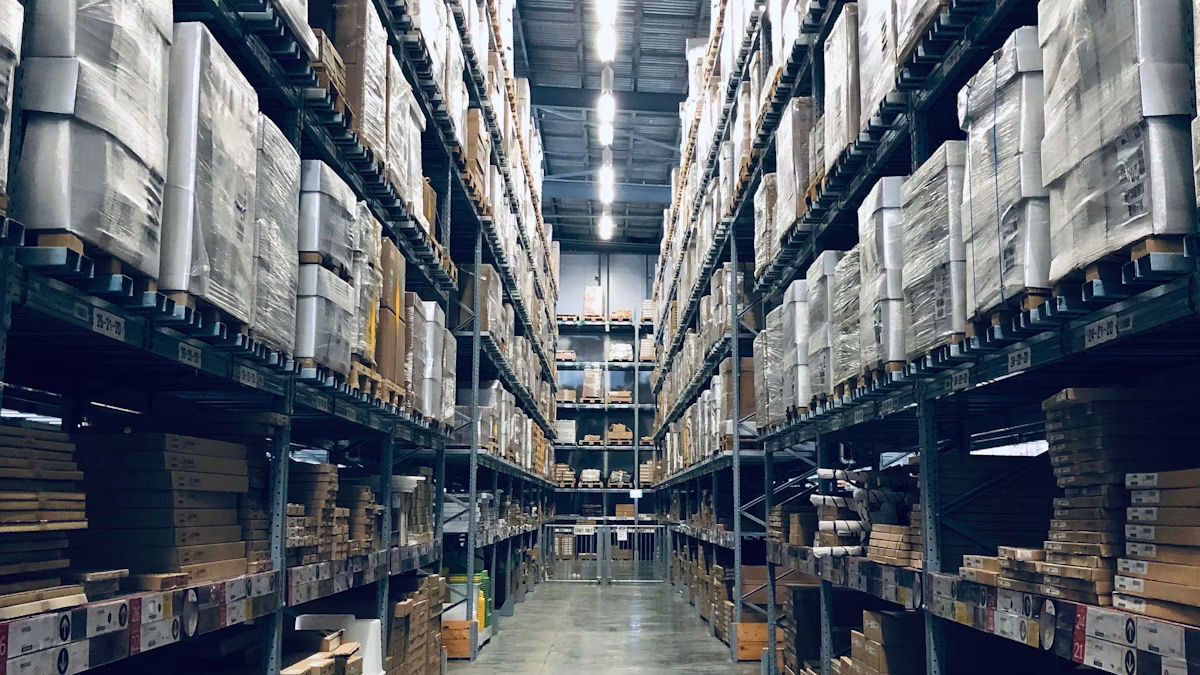
Steel warehouse and metal distribution centre operations

Challenge 2: Format Inconsistency from Global Mill Sources

A UK distributor sourcing stainless from European and Asian mills receives certificates in: English from UK and German mills, German from Austrian and German mills, French from French mills, Italian, Spanish, Japanese, Korean, Chinese, and increasingly from Eastern European sources that may use Cyrillic headers. The field layouts vary — the chemistry table is a vertical list on some certificates and a horizontal table on others. Some mills use SI units, some use imperial, some mix them within the same document. Some certificates are clean digital PDFs; some are multi-generation scans with chemistry values that require careful reading to distinguish 0 from 6 or 1 from 7.

Template-matching MTC extraction systems — software that uses fixed field positions to find values — fail on this diversity. A template built for a specific German mill's certificate layout will not extract correctly from the same German mill's certificate after a template revision. A template built for one Asian mill will not work for any other Asian mill.

AI extraction trained on diverse real-world certificate corpora handles this variability in ways that templates cannot. The extraction model understands the semantic structure of an MTC — that the value after "C" or "Carbon" or "C%" in a chemistry table is likely the carbon content, regardless of whether the table is vertical, horizontal, rotated 90 degrees, or partially obscured by a scan artifact. Accuracy on diverse real-world certificate formats, including multi-generation scans, typically reaches 99.5%+ on major element fields with this approach.


Challenge 3: Split-Lot Traceability Across Multiple Customers

When a distributor purchases 200 tonnes of API 5L X65 pipe and sells it to three different buyers over six months, the documentation challenge is: every buyer needs a certificate, but there is only one original MTC. The original MTC covers the full heat; none of the individual buyers' deliveries exactly correspond to the full heat.

The correct documentation approach requires issuing a supplementary traceability record for each delivery — a document in the distributor's own name that identifies: the original heat number and total quantity, the specific pieces (pipe numbers, bar tags, coil numbers) included in this delivery, the quantity delivered, a statement confirming no heat intermixing during storage, and a reference back to the original mill MTC. This document travels with the buyer's copy of the original MTC.

At scale, generating these supplementary records manually for every split-lot delivery is time-intensive. When 30% of deliveries involve split lots — not unusual for a pipe or stainless distributor — generating supplementary traceability records manually for the full volume of deliveries requires dedicated staff time. The records are also inconsistent: generated by different staff, in slightly different formats, with varying levels of completeness.

A systematic approach generates supplementary traceability records automatically when a lot is allocated to a delivery — pulling the original heat reference, the allocated piece list, and the delivery date from the inventory management system and composing the document without manual assembly. Every buyer gets a consistent, complete supplementary record that links their delivery to the original certificate.


Challenge 4: Multi-Customer Certificate Request Management

Customers request copies of MTCs for multiple purposes and at multiple times after delivery: for their incoming inspection records, for project documentation packages, for audit response, for customer re-certification to their own customers, and occasionally for recall investigation. A distributor with a large customer base receives ongoing certificate requests that are not correlated with the original delivery timeline — a request may come six months or two years after the delivery.

Managing this manually means: receiving a customer request, searching email archives or file systems for the right certificate, finding and sending it. When organized, this takes 5 to 15 minutes per request. When disorganized — and certificate archives at the scale of a large distributor tend toward disorganization because of the volume — it can take hours, may result in sending the wrong certificate, or may result in the response "we can't locate that certificate right now" — which is not an acceptable answer to an auditing customer.

A searchable digital archive indexed by heat number, material grade, customer order, and delivery date reduces certificate retrieval to a query that takes seconds. Customer requests are answered immediately. The archive is comprehensive because every incoming certificate was captured at receipt, not selectively filed when there was time.


Challenge 5: Audit Readiness Under ISO 9001 and Customer Quality Programs

Metals distributors operating under ISO 9001 certification — or under customer-mandated supplier quality programs — are subject to periodic audits that assess their material verification and certificate management processes. An audit typically asks:

  • How do you verify incoming material certificates?
  • Show me the incoming inspection records for a specific delivery
  • How do you link the MTC to the delivery documentation for a specific order?
  • Can you retrieve the MTC for a specific heat number from three years ago?
  • What is your process for handling certificate non-conformances?

The gap between "we have a process" and "here is the documented evidence of the process being applied to this specific delivery" is often the difference between a closed audit and a corrective action request. Audit findings at a metals distributor typically target: absence of inspection records (certificates received but no evidence of review), inability to retrieve historical certificates (archiving failures), inconsistent process application (some deliveries have complete records, others do not), and lack of traceability linkage between certificate and delivery.

A distributor with a documented, systematic MTC verification process — automated extraction, automated comparison, inspection records generated per delivery, heat number indexed archive — can answer every one of these audit questions immediately and with evidence. The difference is not quality intent; it is infrastructure.


What Good Documentation Management Looks Like at Scale

A metals distributor that has solved these five challenges has a process that works like this:

Incoming shipment arrives. The MTC (emailed in advance or delivered with the shipment) is uploaded to the documentation system. AI extraction runs automatically, extracting all key fields regardless of format, language, or scan quality. Extracted values are compared against the grade specification limits automatically. Any out-of-spec values or missing required fields trigger an exception alert to the quality team. For conforming certificates, a timestamped inspection record is generated and linked to the delivery. The original MTC and all associated records are indexed by heat number, grade, supplier, and customer order.

When a lot is split across multiple deliveries, the supplementary traceability record for each delivery is generated automatically with the correct heat reference, piece list, and quantity. Customers receive both the original MTC and the supplementary record with their delivery documentation.

When a customer requests a certificate, the response is immediate: a query by heat number or order number returns the original MTC plus all associated inspection and traceability records in under a minute. When an auditor asks for the inspection records for a specific period, the query by date range returns a complete, consistent set of records.


How TestCert Delivers This for Metals Distributors

TestCert is built for the documentation management demands of metals distributors operating at scale. The platform handles the full cycle: AI extraction of incoming mill certificates in any format from any global mill source, automated verification against grade specification limits, exception routing for quality team review, supplementary traceability record generation for split-lot deliveries, customer certificate delivery management, and a fully searchable archive that returns any certificate in seconds.

Implementation does not require a lengthy IT integration project. Historical certificate archives can be bulk-ingested to extend the searchable record set back before go-live. Incoming certificates begin flowing through automated extraction from the first day of use.

For distributors under ISO 9001 or customer quality audits, the audit trail is complete from day one: every incoming verification action, every exception and its resolution, every delivery documentation package — all time-stamped, role-identified, and retrievable on demand.

Book a demo to see how mid-size and large metals distributors use TestCert at testcert.io.