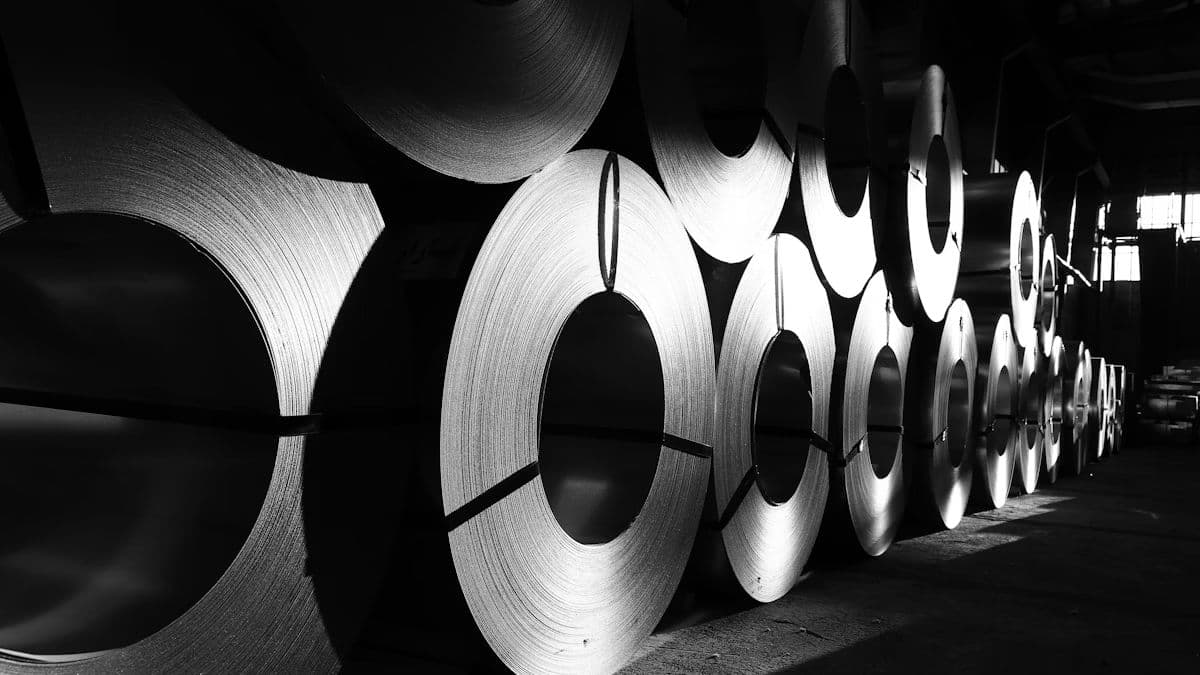
Un distribuidor de metales que almacena tanto acero al carbono como acero inoxidable está operando dos líneas de producto efectivamente separadas bajo un mismo techo, con relaciones de abastecimiento diferentes, clientes diferentes, dinámicas de precio diferentes y, de manera crítica, requisitos de documentación diferentes que no pueden mezclarse sin generar problemas de cumplimiento.
El riesgo de confusión es real: una barra de acero al carbono y una barra de acero inoxidable del mismo diámetro colocadas cerca una de la otra en un almacén, con etiquetas o códigos de color desvanecidos, se ven casi idénticas. Un operario que surte un pedido urgente bajo presión de tiempo, o un empleado de almacén nuevo que aún no ha interiorizado el sistema de codificación por colores, puede tomar el producto equivocado. Las consecuencias de enviar acero al carbono a un cliente que ordenó acero inoxidable (o, en el escenario más raro pero más peligroso, acero inoxidable a un proceso donde la contaminación del sistema con acero al carbono causaría corrosión) van desde un costoso envío de devolución hasta un incidente de calidad grave.
El sistema de documentación no evita las confusiones físicas en el almacén, pero cumple dos funciones: le da al comprador el MTC que hace que el material de grado incorrecto sea detectable en la inspección de recepción antes de que entre a producción, y le da al distribuidor la cadena de evidencia necesaria para investigar y resolver las confusiones cuando ocurren.
Cómo Difieren los Requisitos de Documentación Entre Acero al Carbono y Acero Inoxidable
Requisitos de MTC para Acero al Carbono
El acero al carbono se rige principalmente por las normas de producto de la serie ASTM A (A36, A572, A106, A516, A105 para bridas) y por EN 10025 y EN 10083 en los mercados europeos. La norma general que las engloba es ASTM A6 (para estructural) o ASTM A20 (para placa de recipientes a presión).
Un MTC estándar de acero al carbono bajo EN 10204 3.1 debe documentar: número de colada, grado y especificación del material, composición química (C, Mn, P, S, Si; elementos adicionales para grados HSLA), carbono equivalente (CE = C + Mn/6 + (Cr+Mo+V)/5 + (Ni+Cu)/15) cuando aplique a la soldabilidad, y propiedades mecánicas (fluencia, resistencia a la tensión, elongación con longitud de calibre). Para placa de recipiente a presión A516 Grado 70, también se requiere análisis de producto según A20. Para grados de baja temperatura, los datos de impacto Charpy con muesca en V a la temperatura de prueba especificada son obligatorios.
El campo de carbono en el acero al carbono es típicamente el límite de especificación clave: A36 limita el carbono a 0.26% para placas de más de 3/4 de pulgada de espesor, A516 Grado 70 limita el carbono a 0.27% para placas de más de 2 pulgadas. Estos son los límites de certificación que determinan si la placa puede ser aceptada para su aplicación prevista.
Requisitos de MTC para Acero Inoxidable
El acero inoxidable se rige por la serie ASTM A (A240 para placa/lámina laminada en plano, A276 para barra y perfiles, A312 para tubos y tuberías) y por EN 10088 en los mercados europeos. Las normas generales son ASTM A480 (laminado en plano inoxidable) y ASTM A484 (barras, palanquillas y perfiles).
Un MTC de acero inoxidable debe documentar significativamente más elementos: todos de Cr, Ni, Mo, Ti, Nb, Co, Cu, Al, N, W, V, Se, Mn, Si, C, P, S, la composición completa de la aleación que define el grado. Para grados dúplex, el PREN debe ser calculable. Para grados L, el carbono debe estar explícitamente por debajo de 0.030%. Para grados estabilizados (321, 347), el contenido de titanio o niobio debe estar dentro de los límites del estabilizador.
Bajo ASTM A484, el certificado debe identificar claramente a la organización que lo emite, un campo que es obligatorio para barras y perfiles inoxidables de una manera que no se exige explícitamente para el acero al carbono.
La Diferencia Crítica: Cómo se Ve el Material Confundido
Cuando el acero al carbono y el acero inoxidable se confunden, las consecuencias dependen de la dirección:
Acero al carbono enviado donde se ordenó inoxidable: La inspección de recepción del comprador, si verifica correctamente el MTC contra la orden de compra, detectará esto antes de que el material entre a producción. El certificado del acero al carbono no confirmará la química de Cr/Ni que define al inoxidable. Un inspector de recepción que solo revisa la etiqueta y no el MTC puede pasarlo por alto; uno que compara la química del MTC con la especificación de la orden de compra no lo hará.
Inoxidable enviado donde se ordenó acero al carbono: Esto es menos común pero puede ocurrir en un manejo incorrecto inverso. Puede descubrirse más tarde en el procesamiento (el inoxidable se maquina de manera diferente al acero al carbono) o puede no descubrirse en absoluto si la geometría de la pieza no somete al material a prueba mecánica. Es un problema de costo de material para el distribuidor.
Inoxidable del grado incorrecto: 304 enviado donde se ordenó 316. Esta es la confusión que pasa la inspección casual: ambos son inoxidables, ambos son del mismo color, y el análisis por XRF puede confirmar la serie 300 sin distinguir entre 304 y 316 si el inspector solo revisa los valores de cromo y níquel. Una verificación adecuada del MTC que incluya la confirmación del contenido de molibdeno (316 contiene 2.0–3.0% Mo; 304 no contiene nada) la detectará.

Segregación de la Documentación en el Almacén
Los controles físicos y documentales para un almacén mixto de carbono/inoxidable deben trabajar en conjunto:
Segregación física: El acero al carbono y el acero inoxidable deben almacenarse en secciones de estantería separadas, claramente etiquetadas, sin mezcla de producto. Este es un control básico de almacén que la mayoría de los distribuidores implementan, pero que necesita mantenimiento activo: con el tiempo, la estantería puede llenarse de manera desigual, las secciones se expanden hacia el espacio adyacente y la segregación original se difumina.
Codificación por colores: La barra y el tubo inoxidable típicamente se codifican con un color diferente al del acero al carbono. Los esquemas estándar de codificación por colores varían según el mercado, pero el principio es que todo producto inoxidable tiene un indicador de color visible (pintura, etiqueta o tapa) que lo distingue del acero al carbono. El procedimiento de codificación por colores debe especificar la frecuencia de inspección y los requisitos de reaplicación cuando los códigos se desvanecen.
Segregación de la documentación: Los archivos de certificados deben organizarse de manera que los certificados de inoxidable no puedan confundirse con los certificados de acero al carbono. Esto significa: ubicaciones de archivo separadas o carpetas de sistema separadas para carbono vs. inoxidable, y plantillas de certificado o texto de encabezado que identifiquen claramente la familia de material.
Procesamiento de pedidos mixtos: Cuando un cliente ordena tanto acero al carbono como inoxidable en la misma orden de compra, el proceso de picking y empaque debe asegurar que cada producto tenga su propio MTC, no un único MTC combinado que cubra ambos. Muchos distribuidores cometen el error de proporcionar un certificado por línea de entrega en lugar de por colada de material, lo que puede resultar en una situación en la que se espera que un certificado cubra tanto componentes de carbono como de inoxidable sin una conexión clara entre cada certificado y cada producto.
Capacidades de Documentación para Doble Producto
Un distribuidor que opera líneas de carbono e inoxidable necesita capacidades de documentación que manejen ambas sin confusión:
Reglas de validación conscientes del grado: Las reglas de verificación de recepción para acero al carbono estructural A36 son diferentes de las de placa inoxidable A240 Grado 316L. Un sistema que aplica los límites de A36 a un certificado 316L (o viceversa) generará alarmas espurias y pasará por alto no conformidades reales. La validación consciente del grado significa que el sistema reconoce qué norma aplica según la designación del grado y aplica automáticamente los límites de especificación correctos.
Cadenas de trazabilidad separadas: El número de colada 12345 del Molino de Acero al Carbono A y el número de colada 12345 del Molino Inoxidable B son materiales diferentes. Si el sistema de documentación usa el número de colada como clave primaria sin también indexar el tipo de material, existe el riesgo de colisión de certificados: dos certificados diferentes asociados con el mismo campo de número de colada, causando confusión en la recuperación.
Plantillas de MTC por familia de producto: Si el distribuidor emite sus propios registros de trazabilidad suplementarios (para lotes divididos, corte a medida, etc.), la plantilla debe identificar claramente la familia de producto. Un registro de trazabilidad suplementario para barra de existencia 316L debe ser visualmente distinto de uno para barra estructural A36, no solo en los datos, sino en el encabezado y la estructura del documento, de manera que un inspector de recepción en el muelle del cliente no pueda confundir uno con el otro.
El Riesgo de Contaminación por Soldadura para Distribuidores de Inoxidable
Un reto adicional específico de los distribuidores que manejan tanto carbono como inoxidable: el riesgo de contaminación de las superficies inoxidables con acero al carbono por contacto cruzado durante el almacenamiento, corte o manejo.
Las partículas de acero al carbono que se incrustan en las superficies de acero inoxidable crean sitios para la formación de óxido, lo cual no es solo un problema cosmético, sino que puede reducir la resistencia a la corrosión en ambientes agresivos. ASTM A380 cubre la limpieza y el decapado del acero inoxidable, y en aplicaciones de la industria de procesos, la contaminación de componentes inoxidables con acero al carbono se toma en serio.
Este es principalmente un riesgo de contaminación física (cuchillas de corte diferentes, herramientas de manejo separadas), pero se cruza con la documentación: si una placa inoxidable muestra óxido superficial en el muelle de recepción del comprador, el equipo de calidad puede cuestionar no solo las condiciones de almacenamiento, sino la validez del MTC mismo: ¿era esto realmente inoxidable, o era acero al carbono que se mezcló?
Mantener la separación documentada del manejo de carbono e inoxidable a lo largo de todo el proceso del distribuidor, desde la recepción hasta el almacenamiento, corte y empaque, y documentar esa separación en los registros del sistema de gestión de calidad es la protección contra este tipo de disputa.
Cómo TestCert Gestiona el Inventario Mixto de Acero al Carbono e Inoxidable
TestCert maneja la validación de certificados tanto de acero al carbono como de acero inoxidable dentro de la misma plataforma, con reglas de validación conscientes del grado que aplican automáticamente los límites de especificación correctos según la designación de grado extraída. Un MTC A36 se valida contra los límites de A36; un MTC 316L se valida contra los límites de A240 316L, sin necesidad de configuración manual por certificado.
La familia de producto se indexa como un campo buscable, de modo que las consultas de trazabilidad pueden filtrarse por tipo de material. "Muéstrame todas las coladas inoxidables recibidas en el Q1 de este proveedor" y "muéstrame todas las coladas de acero al carbono con fósforo por encima de 0.030%" son ambas consultas instantáneas en el sistema. La recuperación de certificados por número de colada incluye el contexto de la familia de producto, previniendo el riesgo de colisión entre coladas numeradas de manera idéntica pero de familias de material diferentes.
Para distribuidores que procesan ambas líneas de producto, el seguimiento de trazabilidad de piezas cortadas mantiene cadenas separadas para carbono e inoxidable, y el sistema marca cualquier intento de asignar piezas de un lote inoxidable a un pedido codificado como acero al carbono (o viceversa) como una posible confusión de material que requiere revisión manual.