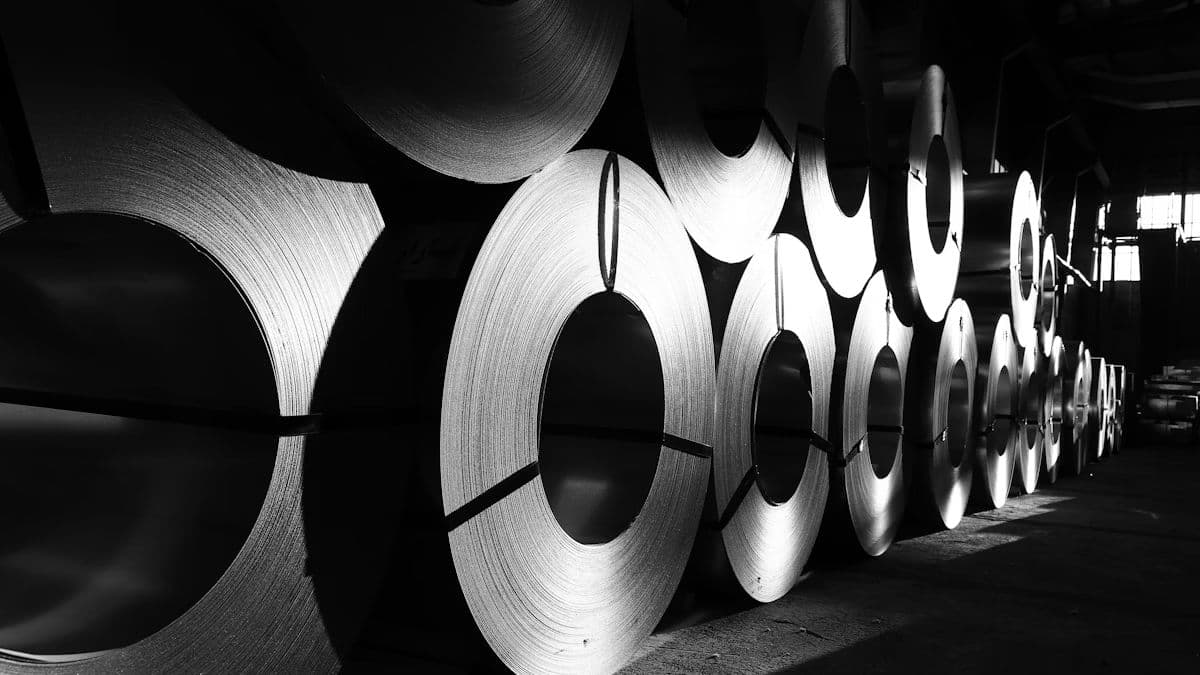
O gerenciamento de MTC na distribuição de aço inoxidável é a área em que os problemas de MTC são mais consequentes e em que a taxa de fraude de material é mais alta. As razões são estruturais: os graus de inoxidável parecem quase idênticos visualmente (304, 316, 304L e 316L são a mesma barra cinza-prateada), os graus são quimicamente semelhantes o suficiente para que o XRF não consiga distingui-los em uma dimensão crítica (teor de carbono), a diferença de preço entre os graus cria incentivo financeiro para substituição, e as aplicações que especificam o grau L (carbono mais baixo) ou um teor específico de molibdênio o fazem porque o modo de falha ao usar o grau errado pode ser catastrófico: corrosão sob tensão em tubulações de processo, sensitização em montagens soldadas ou corrosão em ambientes contendo cloretos.
Um distribuidor que envia 316 quando 316L foi especificado não está cometendo um erro de papelada. Ele pode estar criando condições para uma falha em serviço que resulta em uma reclamação por lesão pessoal, uma parada de processo e uma ação judicial por responsabilidade sobre o produto. A responsabilidade não permanece com o comprador que usou o material: ela segue a cadeia de fornecimento de volta a quem colocou o material errado na remessa.
Entender os requisitos de verificação de grau para a distribuição de inoxidável, e os controles documentais específicos que protegem tanto compradores quanto distribuidores, não é opcional para quem vende inoxidável para aplicações industriais.
O Problema do Grau L: O Que o XRF Não Consegue Dizer
A confusão mais perigosa no aço inoxidável é entre graus padrão e graus L. Os pares são:
- 304 vs 304L: essencialmente idênticos, exceto pelo teor de carbono (304: ≤ 0,08% C; 304L: ≤ 0,030% C)
- 316 vs 316L: o mesmo (316: ≤ 0,08% C; 316L: ≤ 0,030% C)
O teor de molibdênio, a adição que torna o 316 e o 316L mais resistentes à corrosão do que o 304/304L, é o mesmo tanto no grau padrão quanto no grau L. O XRF, que mede a composição elementar por fluorescência de raios X, não consegue detectar carbono porque o carbono é um elemento leve demais para ser medido por XRF (a física da fluorescência de raios X exige elementos mais pesados que aproximadamente o sódio para serem mensuráveis).
Isso significa que uma leitura de XRF em uma barra rotulada como 316L confirmará: ferro, cromo (~17%), níquel (~10%) e molibdênio (~2,2%). Ela não consegue confirmar se o carbono é ≤ 0,030% (grau L) ou ≤ 0,080% (316 padrão). Um resultado de XRF que "confirma 316L" está confirmando a associação à família do grau, não a qualificação de grau L. A única forma de confirmar o teor de carbono do grau L em campo é a OES (Espectroscopia de Emissão Óptica), que consegue medir carbono, mas é semidestrutiva. A análise laboratorial por combustão é o teste definitivo.
Para um distribuidor de inoxidável, isso significa que o MTC é a evidência primária do status de grau L. O valor de carbono no MTC, especificamente, a confirmação de que C ≤ 0,030%, é o campo de certificação crítico. Se o MTC não declarar claramente o teor de carbono, ou se o teor de carbono declarado estiver próximo ou acima de 0,030%, a alegação de grau L é não confirmada ou falsa.

Confusão de Grau de Inoxidável na Cadeia de Suprimentos: Como Acontece
A confusão de grau na distribuição de inoxidável normalmente não acontece por fraude deliberada na usina. Ela acontece por má gestão da cadeia de suprimentos:
Mistura no armazenamento. Um armazém armazena barra redonda 304L e 316L em locais de estante adjacentes. Com o tempo, por meio de reabastecimento, rearranjo físico, uso parcial de feixes, barras de corridas diferentes acabam no mesmo local. As etiquetas ou códigos de cor que identificavam o grau se separam das barras. Um separador atende um pedido de 316L e retira de um local que agora contém uma mistura de barras 304L e 316L.
Degradação da codificação por cores. Muitos centros de serviço usam codificação por cores em tinta para identificar graus de inoxidável: 316L pode ser marcado com pontos de tinta verde na extremidade, 304L com amarelo. Os códigos de cor desbotam, são pintados por cima durante o armazenamento ou são aplicados de forma inconsistente. Um ponto verde desbotado que parece amarelo é uma identificação incorreta de grau prestes a acontecer.
Processamento sem transferência de marcação. Um centro de serviço corta barra 316L no comprimento. A marcação original do número de corrida na extremidade da barra é removida pelo corte da serra. Cada peça cortada precisa ser remarcada com o número de corrida antes de sair da serra. Se essa etapa for pulada, e frequentemente é, sob pressão de tempo, as peças cortadas entram no estoque como barra inoxidável não rotulada de procedência desconhecida.
Agrupamento de múltiplas corridas para pedidos pequenos. Para atender um pedido pequeno, um armazém combina peças de duas corridas diferentes com o mesmo grau. Um único MTC original não pode cobrir ambas as corridas. Um novo registro suplementar é necessário para identificar ambas as corridas. Se isso não for feito, o comprador recebe um MTC que não cobre todo o material da entrega.
O Que um MTC Completo de Aço Inoxidável Deve Mostrar
Para os graus austeníticos comuns (304, 316, 304L, 316L), o MTC deve documentar:
Sob a EN 10204 3.1 (norma para distribuição industrial de inoxidável):
- Designação do grau de aço (o nome completo do grau, não apenas "inoxidável")
- Número de corrida
- Forma e dimensões do produto
- Análise da corrida para todos os elementos especificados
- Propriedades mecânicas: Rp0,2, Rm, alongamento (A5 ou A80)
- Onde grau L: carbono explicitamente declarado (valor típico ≤ 0,025–0,028% para uma boa corrida, claramente abaixo do limite de 0,030%)
- Assinatura do representante de garantia de qualidade autorizado da usina
O campo de carbono é a confirmação crítica de grau L. Um MTC que declara "316L" no campo de grau, mas não mostra um valor de carbono, ou mostra carbono exatamente em 0,030% (exatamente no limite é um sinal de alerta de fraude), não é uma certificação confiável de grau L. Compradores atentos à qualidade sinalizarão isso.
Para graus duplex (2205, LDX 2101, 2507):
- Todos os principais elementos de liga: Cr, Ni, Mo, N, Mn, Si, C, S, P
- Cálculo do Número Equivalente de Resistência à Corrosão por Pite (PREN): PREN = %Cr + 3,3%Mo + 16%N; isso confirma o nível de resistência à corrosão
- Teor de ferrita no balanço austenita/ferrita (tipicamente 35–65% de ferrita conforme ASTM A923 ou equivalente)
- Resultados de ensaio de impacto Charpy na temperatura especificada para aplicações criogênicas ou de baixa temperatura
- Ensaio de fase intermetálica para graus duplex (A923 ou equivalente) quando exigido
Para o 2205 (UNS S31803 / S32205), o PREN deve ser ≥ 35. Isso deve ser calculável a partir da química do MTC: um distribuidor que não consegue fornecer a tabela de química completa não consegue confirmar o PREN, mesmo que o rótulo do grau esteja correto.
O Risco de Fraude nas Cadeias de Suprimentos de Inoxidável
A diferença de preço entre os graus de inoxidável cria incentivo financeiro para substituição. O 316L tem um prêmio sobre o 304L (tipicamente 15–25%, dependendo do mercado). O prêmio sobre o 316 padrão é menor, mas ainda presente. Quando o mercado à vista está apertado e o mercado paralelo está operando, o risco de receber material mal certificado aumenta.
Padrões documentados de fraude de MTC em inoxidável incluem:
- Reetiquetagem de grau: barra 304L fisicamente reetiquetada ou reestencilada como 316L, com um MTC fabricado ou alterado para corresponder
- Rebaixamento de padrão para L: MTC de 316 alterado para mostrar um valor de carbono mais baixo, fazendo o material de grau padrão parecer ser grau L
- Reciclagem de número de corrida: um MTC autêntico de uma corrida reutilizado com descrições de produto alteradas para cobrir material de uma corrida diferente
- Personificação de usina: MTCs fraudulentos usando o papel timbrado de usinas conceituadas, com dados de ensaio fabricados
A detecção no recebimento exige:
- Comparar os valores de carbono com a faixa estatística esperada para o grau alegado (o 316L genuíno de usinas estabelecidas normalmente mostra carbono na faixa de 0,010–0,025%, bem abaixo do limite de 0,030%; valores de exatamente 0,030% são suspeitos)
- Verificação por XRF dos principais elementos de liga (Cr, Ni, Mo) para confirmar a família do grau
- Para pedidos de alto valor, verificação direta do certificado da usina por meio do portal on-line da usina ou confirmação por escrito
Controles de Rastreabilidade para Distribuidores de Inoxidável
Segregação de armazenamento em nível de corrida. Cada lote de corrida deve ser armazenado em um local claramente identificado, separado de outras corridas do mesmo grau. Misturar lotes de corrida em um compartimento comum, mesmo que do mesmo grau, cria problemas de recuperação: quando ambos os lotes estão no compartimento e um MTC é solicitado, quais peças pertencem a qual corrida?
Disciplina de marcação de peças cortadas. Toda peça de barra, chapa ou tubo inoxidável que é cortada deve ser marcada com o número de corrida antes de sair da área de corte. Isso é uma disciplina de processo, não um exercício documental: sem marca, sem movimentação.
Manutenção da codificação de cores por grau. Se a codificação por cores com tinta for usada, o procedimento de codificação por cores deve incluir inspeção periódica e reaplicação onde estiver desbotada. Melhor ainda: usar etiquetas de número de corrida como identificação primária e a codificação por cores apenas como um recurso visual secundário.
Documentação de lote dividido para cada divisão. Toda vez que um lote de corrida é dividido entre entregas, um documento de rastreabilidade suplementar é emitido identificando quais peças foram para qual pedido. Este documento deve ser gerado antes que a entrega saia, não retrospectivamente quando um cliente questiona.
Como a TestCert Aborda os Desafios de Rastreabilidade Específicos do Inoxidável
O mecanismo de extração da TestCert captura especificamente o teor de carbono como um campo separado e validado para certificados de inoxidável, não apenas a designação do grau. Para material de grau L alegado, o sistema sinaliza qualquer certificado em que o carbono não esteja claramente abaixo do máximo do grau L (0,030%), incluindo casos em que o campo de carbono está ausente ou em que o valor está exatamente no limite sem variância natural de medição.
Para graus duplex, o cálculo do PREN a partir dos elementos químicos extraídos é automático, sem necessidade de cálculo manual. O teor de ferrita e os resultados de ensaio de fase intermetálica são capturados como campos distintos. Um certificado 2205 em que o PREN calcula abaixo de 35 com base na química relatada é sinalizado imediatamente, independentemente do que a designação do grau no certificado diga.
A rastreabilidade em nível de corrida para lotes divididos é rastreada no módulo de estoque, com geração automática de registro suplementar quando porções de um lote são alocadas a pedidos de clientes diferentes. Cada ID de peça alocado a cada pedido de cliente é registrado com o número de corrida, fornecendo uma contabilização completa do lote em qualquer ponto durante seu ciclo de vida de distribuição.